Sunday, November 16, 2014

Nigeria's Celebrities and the Rave for 'Packaging'

On a quiet January day, a Medview Airlines plane was preparing to take-off from Terminal 2 of the
Murtala Mohammed Airport, Lagos, destination, Abuja. Passengers were seated, but the business-class section was conspicuously empty. On recognizing actress Eniola Badmus who was sitting contentedly in economy class, one of the air hostesses asked her to move over as it were, to ‘higher ground’. Nearby, a budding actress (we want the name na) who by a freak coincidence, had been cast in Obi Emelonye’s Last Flight to Abuja was watching quietly. She then politely beckoned the hostess and asked to follow suit for a short period to – believe it or not – take photos there. Stunned, the airline staff agreed, well aware that the images were going to be used to create the illusion of an arrival in the big league.
There are no prizes for guessing correctly where the images will end and how they will be framed, complete with a matching hashtag – #FirstClassThings maybe – for the viewing pleasure of social media users.
“It was shocking”, says Lorenzo Menakaya, also an actor, who was aboard the same flight. “I just took one look at her and knew there was only one place the pictures would end up – Instagram”.

Celebrating Achebe: The Man, His Work, & His World

The Magical Years
On November 16, 1930, in Nnobi, near my hometown of Ogidi, providence ushered me into a world at a cultural crossroads. By then, a longstanding clash of Western and African civilizations had generated deep conversations and struggles between their respective languages, religions, and cultures.
Crossroads possess a certain dangerous potency. Anyone born there must wrestle with their multiheaded spirits and return to his or her people with the boon of prophetic vision; or accept, as I have, life’s interminable mysteries.
My initiation into the complicated world of Ndi Igbo was at the hands of my mother and my older sister, Zinobia, who furnished me with a number of wonderful stories from our ancient Igbo tradition. The tales were steeped in intrigue, spiced with oral acrobatics and song, but always resolute in their moral message. My favorite stories starred the tortoise mbe, and celebrated his mischievous escapades. As a child, sitting quietly, mesmerized, story time took on a whole new world of meaning and importance. I realize, reminiscing about these events, that it is little wonder I decided to become a storyteller. Later in my literary career I traveled back to the magic of the storytelling of my youth to write my children’s books: How the Leopard Got His Claws, Chike and the River, The Drum, and The Flute: A Children’s Story (Tortoise books).

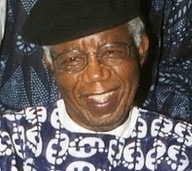
Happy Birthday Chinua Achebe. #Inspiration

Achebe (b. November 16, 1930)
"I'd like to pursue my own understanding and study of Igbo culture, which excites me more and more everyday.... This is one of the major cultures in Africa, and it's received scant attention. And somebody ought to get down to work on it, you know, just to uncover the mainspring of Igbo thinking. This is a major undertaking. And I'm not certain just what aspect I shall begin with, but that doesn't matter--this is the major area that needs to be attended to. So, that's the next thing that I'm excited about--getting back to Igboland, getting back to the study of Igbo people and Igbo culture." (Chinua Achebe, 1976)

"When I write, I always think of my hometown, my district, my province, my race. One must take into account those who speak a language which is exclusively yours and whose problems you share. Problems like oppression, like living in a given society. I began from the inside, in my own thinking, and worked out; and I hope that others will understand and get something out of what I am saying." (Chinua Achebe, 1973)

Saturday, November 15, 2014

Wetin Be Pidgin, Where E Dey Come From?

Wetin dey happen my people? Kilon shele? How far? I hope sey you bam?
Have you ever wondered where pidgin originated from? Or why so many Nigerians can speak it but not necessarily know how to speak their native language? Well, read on to find this out and more. I promise I won’t bore you!
Okay, so first up pidgin can be argued to be (though many people would beg to differ) the Lingua Franca of Nigeria, in other words the “Bridge Language” and to define it further, is the language that is widely used as a means of communication amongst most Nigerians.
Let’s talk about pidgin as a whole; there are different kinds of pidgin. West African Pidgin (Nigerian Pidgin, Cameroonian Pidgin, Sierra Leone Krio), Indonesian Pidgin (Tok Pisin, spoken in Papua New Guinea) as well as Pidgin spoken in parts of Asia and the Caribbean.
It is said that pidgin takes more of a “baby talk” approach and seems to imitate toddler speech or phrasing (calm down, I’m not saying that people who speak it sound like babies oh, just listen to the explanation first). Toddler speech doesn’t have any tones and uses simple vowels and like Pidgin is used to get what you want, using whatever communication and terms of reference you can (in the quickest way possible). Originally, pidgin was a few well placed words here and there with gestures to accompany them, and the rest as they say is history.

Pidgin: Unofficial Naija Mother Tongue

Abeg. How far? How you dey? Na wa for you o! These are commonly used phrases, in pidgin English – a language most Nigerians are familiar with. In many parts of the country, Pidgin English already functions as the unofficial means of spoken correspondence. For instance, my friend walks up to me and says, “how you dey, hope you are fine, Abeg can you give me this pen?” (Do you notice the transition from Pidgin English to English?)
As a nation, Nigeria comprises of over 200 ethnic groups, with Hausa, Igbo and Yoruba as the three major languages and English as our lingua franca. Still, because English is not any Nigerian’s mother tongue, major and minor errors are made by people on a daily basis; sadly, this case looks far from ending with the current state of our educational system. In schools today, especially government-owned schools, many students speak more of Pidgin English than English.
Growing up, I was exposed to English and Yoruba, my parents prevented me from speaking pidgin English because of the effect it may have had on my English later on, but as time went on I mingled with my peers and gradually got exposed to Pidgin; thanks to the kind of background I had, I’ve been able to balance my usage of both languages.

Writing Fiction: What has Pidgin got to do With it?

Pidgin is formally defined as “a simplified speech used for communication between people with different languages,” according to the Merriam-Webster dictionary.  With more than 250 ethnic groups, Nigerian Pidgin English (also known as “Broken English”) is recognized as an informal means of communication and is widely spoken across the nation.
Pidgin English is not the official language in Nigeria, though some people would want it that way. One of the reasons why Pidgin is frowned upon is that opponents believe that prolonged use will color your English because it is considered an adulterated form of English. The same people would argue that speaking your native language fluently will color your English.  I disagree on both counts. But I will leave that for another day.
Most Nigerians are familiar with basic terms and forms of usage.  Examples of common terms are:
Wetin be dis? – What is this?
You dey craze – You are crazy
I no sabi im name – I don’t know his name
Dat pikin head resemble mango – That child’s head looks like a mango
More advanced terms are common with more advanced speakers.  So, what does this have to do with fiction?

How You Dey? Africa & A Language Called Pidgin

(Saharareporters.com TV) - As African metros grow dramatically, and as custom and culture diffuse across the many different physical, geographic, and social borders that mark the continent, one element seems to have achieved some constancy despite such change; a language called “pidgin”. A fusion of English and different traditional languages, “pidgin” is popular across Nigeria.
In almost any setting and in any scene, pidgin is a linguistic element that translates effortlessly across class, age, educational level and tribe. While shopping, at work or school, or in any of many other environments, Naija pidgin can be overheard peppering everyday speech with a sweetly symphonic flavor, tying the dish that is daily dialogue together quite savorily.
From the most spirited “how you dey?” to the most melancholy “haba!”, and from the tongues of school-children, area boys, or even grandmothers, pidgin is a well-embedded, well-embraced, and ever-evolving facet of Nigerian society, as natural (and as necessary) as oxygen. Pidgin even supersedes speech, like a living thing it adapts and grows as the climate around it changes.
Even in the United States, where I have lived my entire life, pidgin and some of its variants can be heard among African communities from all reaches of the continent.

Wednesday, November 12, 2014

Single Ladies Vs Married Women: A Man's Excuse

I have read with enthusiasm the single ladies piece, it is indeed a well thought and comprehensive observation. I agree with her totally, I mean I agree with her 100 percent. But nevertheless, I will submit my defense by doing a critical appraisal taking into cognizance the position of married men as well, focusing on married men in Africa.
I am a married man with three kids, and I have been married for 8years now. I love and cherish my family and I will do anything to protect them from danger of any sort.
I appeal to all single ladies and also our wives in the house, not to judge us, we are not cursed neither are we covetous, I also do not feel that the problem is the general saying that men are "polygamous in nature." No. I have examined critically this particular issue that has torn many marriages apart and I am pleased to inform you all on this forum that the problem is neither from the husband nor the single girls, but the so called wives at home that believe that after capturing a mans home, you do not owe the man any further, apart from bearing him kids.
Every thing in this life will age and you can only help by employing renewal measures. Starting from the phone we buy at computer village, we will use for sometime and it depreciates in value and also beauty, it is then advisable to take it to computer village to change its casing thereby mitigating the severe effect of wear and tear.
Same applies to building structures, cars, to mention a few. There is perhaps nothing extra ordinary in what these single girls give us, the only difference is concentrated detailing. They are indeed more detailed. If your wife wakes up beside you with a frown, there is every probability that these so called singles would wake up with either a kiss, a smile or a peck, the rationale behind it I do not know, but I am talking from immense experience.

Dear Single Lady, Leave Our Husbands Alone

Dear Spinster (aka “Pissed Single Girl”),
On behalf of married women here is a response to you.
If you truly value marriage and plan to have yours one day then the excuse that you were lured or enticed to follow a married man is not an excuse. The fact is that you have no morals or respect for your body or even the marriage you so desire to have one day.
I am not an IG or Twitter or even whatever social media platform person and do not encourage these married ladies to use it let alone pass any silly message through it to anyone be it single or married.
Marriage is not a joke so do not come to the public and put your marriage under unnecessary scrutiny. And yes like the single lady said deal with your man and stop blaming anyone.
Having said that, I see where the ladies who lamented are coming from – truth be told men will not date themselves (well, unless he swings both ways!!!) so if we women would say no to the advancement of these so called horny married men (aka Oke mkpi) the world would be a better place. If girls would say an emphatic NO when a married guy chases her no matter the splendor he showers on her and then the next girl and then the next… of course they would get the message. But noooo…. In fact girls are even the ones that chase after the men themselves rolling their booties and tits all around the place in nicely packaged skirts and blouses, seeking the man’s attention just because he is what you would have liked in a husband.

Dear Married Woman, Blame Your Husband

Dear Married Woman,
These couple of days I have read messages on Instagram, Twitter, Facebook and the likes and as much as I have tried to bridle my tongue and not say anything; just let it slide, my emotion has chosen to betray me.
So today I stand in defence of all unjustly stigmatised Single ladies. To you married woman who has taken to the social media to air her grievances, please re-direct your energy into bridling your erring husband.
 More than half of the time, these men are the ones who pursue single girls unrelentingly, luring them with the worldly goodies the Good Lord has bequeathed on them. And let me let you know what you’d never hear from your husband, they speak ill of you. Half the time, the reason they are still with you is because of our own conscious effort not to break another girl’s home as we look forward to having ours.
I would share with you my most recent experience. I was introduced to a visually-impaired man who promised to help me secure a job. Before I met him, this man had already overwhelmed me with calls and messages. The only reason I chose to keep my pre-arranged meeting with him was because my sister had been trying extra hard to help me secure a job. So as not to seem “picky” and unwilling to work, I met with him. He told me outrightly that aside from him being married, blind and a Christian what else would stop me from dating him. So I asked if those reasons he gave were not genuine enough. He said they were not. That except if I could come up with something else, then I had no reason but to go out with him.

Wednesday, October 29, 2014

Hurray for Nollywood

Sources: PricewaterhouseCoopers, Statista, National
Association of Theater Owners, DIBD India
Nigerian cinema… Nollywood, produces about 1,000 films a year — a cinematic output that eclipses Hollywood’s and is second only to India’s Bollywood. And the industry continues to develop. Nigerian box office revenues, which have nearly doubled since 2009, are projected to grow an additional 70 percent by 2018, to $171 million a year, according to a report by the consulting firm PricewaterhouseCoopers.
By international standards, the typical Nollywood film is a bare-bones affair: Budgets rarely exceed $40,000, cameras are handheld, set design is nearly nonexistent, and filming and post-production take just a few weeks. But the casual, do-it-yourself nature of this industry belies its size and importance, said Vicki Myburgh, a media and entertainment analyst in South Africa for PwC, who said that the Nigerian movie business was thought to be the country’s second largest employer after agriculture.
While such statistics are impressive, Ms. Myburgh said that considering that Nigeria sometimes makes more than 100 films a month and has a population of more than 170 million people, its domestic movie business should be generating much more revenue. In 2013, all filmed entertainment in Nigeria — including video, streaming and box office sales — grossed just $178 million, according to PwC.
The biggest problem, Ms. Myburgh said, is that the majority of Nigerian films are bootlegged immediately after release. She cited the World Bank’s estimate that 90 percent of the DVDs in circulation in Nigeria are illegal copies. “If you factor all those pirated films in, you begin to get a sense of how big the industry really is,” she said.

Tuesday, October 21, 2014

The Bible In A Vulgar Hand

The book thus put in every vulgar hand,
Which each presum'd he best could understand,
The common rule was made the common prey,
And at the mercy of the rabble lay.
The tender page with horny fists was gall'd,
And he was gifted most that loudest bawl'd:
The spirit gave the doctoral degree,
And every member of a company
Was of his trade and of the Bible free.
Plain truths enough for needful use they found,
But men would still be itching to expound:
Each was ambitious of th'obscurest place,
No measure ta'en from knowledge, all from grace.
Study and pains were now no more their care;
Texts were explained by fasting and by prayer:
This was the fruit the private spirit brought,
Occasion'd by great zeal and little thought.
                    John Dryden, 1682 (Religio Laici 822-38)

Thoughts on Juju, Jazz, and Related Issues

As I might or might not have mentioned before, growing up as a kid I was more afraid of Nigerian movies or Nollywood movies as they are now called than I was of your typical Hollywood horror flick. I was more afraid of the witches, wizards, evil spirits, demons and witchdoctors (aka babalawo aka dibia) that were common in that period of nollywood history than I was of Freddy Kruger, Jason, Candyman or Chuckie (ok maybe Chuckie freaked young me a little bit). Why is this you ask? To my younger mind the threat of witchcraft, someone using native medicine to make you go mad, kidnapping you and using your body parts for rituals was realer (more real?) than Freddy Kruger who I knew was not real and seemed to only attack oyibo children (oyibo translates as white but refers to ‘western’ people). I was safe in Nigeria from Freddy Kruger I thought but was not safe from the Nigerian occult. Why did I think that? Growing up and this is still true today, the Nigerian society has stories of occult happenings floating around, stories perpetuated by people that never witnessed the original event or the real reason behind the event.
I remember stories about children who collected sweets from their nursery school teacher and the sweets turned into human fingers. How did they know this? Well apparently one of the kids did not consume his sweets when he was given and left it in his pocket. When his mother took his trousers to go wash them she felt something in his pocket and lo and behold it was a human finger.

Sunday, October 19, 2014

No Oscars for Nollywood at 2015 Academy Awards

EVEN though a local Oscars selection committee has since February 2014 been constituted by the Academy of Motion Picture Arts & Sciences to select an entry that will best represent Nollywood in the Best Foreign Language Film category for the annual Academy Awards, Nigeria did not feature on the list of 83 countries that have submitted films for consideration in that category of the prestigious award.
Chairman, Nigeria Oscars Selection Committee (NOSC), Chineze Anyaene, confirmed during the week that though the selection committee received a number of entries, none of them, according to her, "met the basic criteria for selection'. The academy insists that entries for the foreign language film category must be feature-length movie produced outside of the U.S. with a predominantly non-English dialogue track and accurate English subtitles. But according to Anyaene who produced and directed the commercially successful movie Ije, most of the entries the committee received were "either in English and some of those that were not in English were not properly subtitled and quite a number of them were lacking in some technical details".

Chibok Girls and the Conquered Women of Biafra


“Stop pretending that you are a human being!” a victim of sexual abuse tells her abuser. They might not exactly be able to utter such words to their captors, but this is likely the thought that would be going through the minds of hundreds of the students of Government Girls Secondary School, Borno State, who were abducted by the Boko Haram insurgents since two weeks [six months] now.
Perhaps, the only trauma that would make these innocent girls even sadder in their captivity is the absence of news of any attempt at their rescue. According to the parents of the abducted girls, so far, there had been no known official effort at rescuing the girls, despite the enlarged security meetings.