Wednesday, January 31, 2018

Map is not Territory: Religion, Myths, and Rituals

"What we study when we study religion is one mode of constructing worlds of meaning, worlds within which [human beings] find themselves and in which they choose to dwell. What we study is the passion and drama of man [and woman] discovering the truth of what it is to be human. History is the framework within whose perimeter those human expressions, activities and intentionalities that we call 'religious' occur. Religion is the quest, within the bounds of the human, historical condition, for the power to manipulate and negotiate one's 'situation' so as to have 'space' in which to meaningfully dwell. It is the power to relate ones domain to the plurality of environmental and social spheres in such a way as to guarantee the conviction that ones existence 'matters'. Religion is a distinctive mode of human creativity, a creativity which both discovers limits and creates limits for humane existence. What we study when we study religion is the variety of attempts to map, construct and inhabit such positions of power through the use of myths, rituals and experiences of transformation."

Jonathan Z. Smith, 1978: 290 - 291
Map is not Territory: Studies in the History of Religions

Thursday, January 11, 2018

This is Lagos: Tales From Daily Bus Ride II

(By Adesegun Damazio) - Tales from the early morning bus... 
**************
CONDUCTOR: Sand field, Law School, CMS! Sand field, Law School, CMS!!
DRIVER: **shouts at the conductor** Weyrey awon LASTMA wà leyin wà o, instead ko watch, o n pe ero weyrey (Mad man! LASTMA officers are behind us o. Instead of you to "watch", you're calling mad passengers)
CONDUCTOR: Weyrey lawon people yen sha. Your side! your side! (Those people are mad sha. Your side, your side - which colloquially means "zoom off, zoom off")
**Few minutes later**
CONDUCTOR: Yes sir, your money.
PASSENGER 1: Conductor I'm not comfortable here. Please tell them to shift.
CONDUCTOR: Abeg help am shift for there. Na four four.
PASSENGER 1: Please help me shift

Saturday, January 06, 2018

The World's Not a Level Playing Field

(By Nkechi Bianze) – THE WORLD IS NOT A LEVEL PLAYING FIELD 
She lost her parents before the age of 12, so she went to live with an aunty who although turned her into an unpaid house-girl, but was at least nice enough to send her to a nearby public secondary school. She finished secondary school with a good WAEC result.
At 18, she ran away from home, after her auntie’s husband tried to rape her.
Cici slept in church buildings for some days till a member of the church took pity on her, and decided to employ her as an office cleaner and office messenger. She also gave her free accommodation.
At 19, and just about a year into her new job, the sister of the entrepreneur who she worked for as a cleaner/messenger wanted a nanny from Nigeria. She couldn’t afford to pay the professional nannies in the UK, so she opted for an “imported” one from Nigeria.
The lady was going back to school for an intensive two-year program, so she needed someone to look after her three children while she combined full-time education and full-time work.

Nigerian Marriages and Trauma of Domestic Violence

(By Wana Udobang) – ‘We are brought up to think suffering this violence is OK’: domestic abuse in Nigeria
Dr Perpetua Mbanefo was just getting ready to drive to her new internship in Lagos when her husband suddenly got upset, seizing her car keys and medical licence. “He said I am becoming too free. Then I asked him for my things back and he got very upset, dragged me and threatened to stab me with a broken bottle.”
Her voice shakes as she talks. The next morning, again as she was preparing for work, he stopped her from leaving the house. “He said I am not going anywhere, [that] he owns me. He started calling me names, like ashewo [slut], and said that I am sleeping with people in my workplace. I didn’t pay attention to that because none of it was true. He has told me that if he decides to lock me up, nobody is going to come and ask because it is a family issue.” 
When he threatened her with an electric iron, Mbanefo climbed into the bed where he couldn’t reach her, but still got a blow to her head that meant she needed to go to hospital. She told the doctor how she’d got the wound. He shrugged, treated her and sent her home again.

Monday, December 11, 2017

"Die by Fire": A Mentality of Nigerian Christians

(By Adesegun Damazio) - Die by fire. 
No, no one has to die by anything, not especially when death is invoked through a religion that promotes peace.
Save for a few times when I've had to attend other churches either out of compulsion or eventful engagements, I've been a Catholic all my life and owe my religious views to the teachings I've imbibed from Catholicism.
This belief, is one which triggers boredom when I come across people who pray for an unhealthily long period of time. As our faces are different, so are our needs. But on closer inspection, it's quite easy to tell that these prolonged prayers are often a repetition of litanies, with only the wordings changing. If I had my way, the Nigerian version of the Catholic Charismatic Renewal will be reformed to a point where members begin to pray more peacefully.
This belief, is one which triggers discomfort when I hear people pray death and destruction over people they consider "enemies". But then, have you ever bothered to ask why you alone might have so many enemies to start with? Could it be because you're one heck of a troublemaker yourself who can't help but offend "them" or do these "enemies" just pick on easygoing people because they can?

Saturday, December 09, 2017

Of Cultures, Taboos, and Chief Priests

My father always told me that "a deity is as benevolent or fiendish as its chief priest or priestess." Recently, I was re-reading Mary Douglas's seminal work, Purity and Danger, and her analysis of how dominant sections of a society determine its taboo system reminded me of my father's wisdom. Douglas writes: "The study of taboo impinges inevitably upon philosophy of belief. The taboo-maintained rules will be as repressive as the leading members of the society want them to be. If the makers of opinion want to prevent freemen from marrying slaves, or want to maintain a complex chain of inter-generational dynastic marriages, or they want to extort crushing levies -- whether for the maintenance of the clergy or for the lavish ceremonials of royalty -- the taboo system that supports their wishes will endure. Criticisms will be suppressed, whole areas of life become unspeakable and, in consequence, unthinkable. But when the controllers of opinion want a different way of life, the taboos will lose credibility and their selected view of the universe will be revised." The mindset and worldview of these "mouthpieces" of the gods, with the support of secular powers within the community, ultimately dictates the social tone of the community's sense of morality.

Mary Douglas, 1966 (2002): xiii
Purity and Danger: An Analysis of the Concept of Pollution and Taboo 

15 Facts on African Religions

Religion Distribution in Africa
(By Jacob K. Olupona) - African religions cover a diverse landscape of ethnic groups, languages, African Religions: A Very Short Introduction shares an interesting list of 15 facts on African religions.
cultures, and worldviews. Here, Jacob K. Olupona, author of 

1. African traditional religion refers to the
 indigenous or autochthonous religions of the African people. It deals with their cosmology, ritual practices, symbols, arts, society, and so on. Because religion is a way of life, it relates to culture and society as they affect the worldview of the African people.

2. Traditional African religions are not stagnant but highly dynamic and constantly reacting to various shifting influences such as old age, modernity, and technological advances.

3. Traditional African religions are less of faith traditions and more of lived traditions. They are less concerned with doctrines and much more so with rituals, ceremonies, and lived practices.

Wednesday, November 01, 2017

The Symbolism of the Goddess

(By Starhawk) - "The symbolism of the Goddess is not a parallel structure to the symbolism of God the Father. The Goddess does not rule the world; she is the world. Manifest in each of us, She can be known internally by every individual, in all her magnificent diversity. ...

The importance of the Goddess symbol for women cannot be overstressed. The Image of the Goddess inspires women to see ourselves as divine, our bodies as sacred, the changing phases of our lives as holy, our aggression as healthy, our anger as purifying, and our power to nurture and create, but also to limit and destroy when necessary, as the very force that sustains all life. Through the goddess, we can discover our strength, enlighten our minds, own our bodies, and celebrate our emotions. We can move beyond narrow, constricting roles and become whole.

The Goddess is also important for men. The oppression of men in Father God-ruled patriarchy is perhaps less obvious but no less tragic than that of women. Men are encouraged to identify with a model no human being can successfully emulate: to be minirulers of narrow universes. They are internally split, into a 'spiritual' self that is supposed to conquer their baser animal and emotional natures. They are at war with themselves: in the West, to 'conquer' sin; in the East, to 'conquer' desire and ego. Few escape from these wars undamaged.

Wednesday, October 11, 2017

My Father's House by Reggie Ugwu

(By Reggie Ugwu)

After my brother dies and my father was partially paralyzed, my family traveled 7,000 miles in search of an old home, a new house, and the things we'd lost on the road in between.

I remember feeling grateful that we never said “Merry Christmas.” We didn’t say it on Christmas morning when we awoke in Virginia, during a layover at the world’s most desolate Hampton Inn & Suites, and took long showers and poured too much batter into the waffle machine. Or at Washington Dulles International Airport, 1,400 miles from our cul-de-sac in Houston, where, at 8 a.m., bright, deserted corridors seemed to me pleasantly indifferent to the calendar. Near midnight on Christmas Eve, we had wished for a shuttle in lieu of a sleigh, making our plea with a dead-eyed driver who we’d been told could take us to the Hampton Inn. His broad white vessel didn’t have a ramp for Dad’s electric wheelchair — the one that chirped like a repair droid (meep murp) whenever you turned it on — and was too far above the ground for us to maneuver him out of it and into a seat. The driver suggested that my sister Adaeze and I ride the shuttle with our bags while Mom and Dad follow in a taxi. But Mom threw me a look that even I understood meant “I don’t want to be alone,” and so Adaeze rode with the bags while the three of us stayed behind, waiting by the curb at passenger pickup as the cool black night ticked into morning.

Of Pope Francis and Catholic Compassion

(CNN—Jill Filipovic) – Is Catholicism about faith and compassion, or rigid doctrine and exclusion? According to a group of conservative Catholics who just accused Pope Francis of spreading heresy, it's the latter.
Sixty-two (somewhat marginal) Catholic scholars and clergy have signed a letter that disputes Francis' signaling of his willingness to allow divorced and remarried people to receive communion. This, they say, is immoral and heretical, a sign of Francis "misleading the flock." Far better, in this retrograde reading of doctrine, to ostracize and shame the remarried as "adulterers" and the divorced as sinful failures. 
Really?
I've seen how this "old way" played out in my own family, and it puts Pope Francis' more reform-minded church in useful perspective. My grandparents were devout Catholics, married young, and had five children; my grandfather also beat my grandmother. She eventually left -- a painful and terrifying decision for a woman with only a high school degree in 1950s America. She supported the five kids by working multiple low-wage jobs at once. He did his damnedest to skirt financial responsibility, and she struggled her entire life.

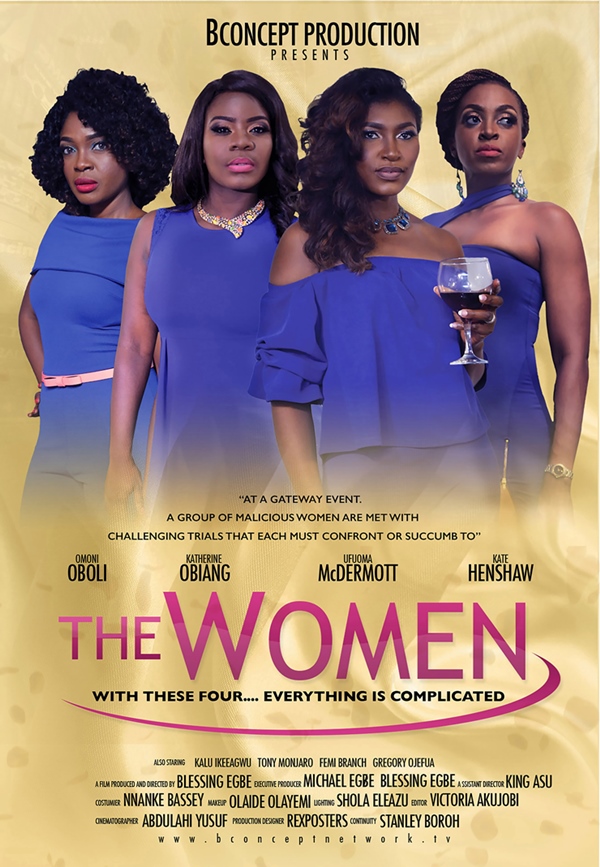
"When Women Gather..." - A Movie Review

(By Tony Kan) – “When Women Gather, There Is War!” – A Review of The Women 
 Every movie has an emotional core, its beating heart.
In The Women, Blessing Egbe’s latest movie which opened in cinemas yesterday, the core lies in a statement mouthed by Teni (Omoni Oboli) who tells her long-suffering husband: “Where two or three women are gathered, there is a silent war.”
Cold, hot or silent, wars lead to casualties and there are casualties aplenty in The Women.
The premise of The Women is not absolutely original and neither does it pretend to re-invent the wheel. What Blessing Egbe, who gave us Lekki Wives, has done is to present us with a story (sprinkled with her inventive touch) that is real-to-life, thought provoking and funny as hell.
Consider this killer exchange between Chubby and Omo.
Chubby: Does your husband know you are here?
Omo: No. If he finds out he will kill me
Chubby: So why are you here then? You want to die?