Showing posts with label Kunle Afolayan. Show all posts

Saturday, April 20, 2019

Nollywood, Alaba Markerters, and New Nollywood


(By Andrew Rice) - “Most of [Nollywood] movies … are awful, marred by slapdash production, melodramatic acting and ludicrous plots. [Kunle] Afolayan, who is 37, is one of a group of upstart directors trying to transcend those rote formulas and low expectations. His breakthrough film, the 2009 thriller “The Figurine,” was an aesthetic leap: ... it announced the arrival of a swaggering talent keen to upset an immature industry. Unlike most Nollywood fare, “The Figurine” was released in actual theaters, not on cheap discs, playing to packed houses next to Hollywood features. “Many observers,” Jonathan Haynes, a scholar of Nollywood, recently wrote, “have been waiting a long time for this kind of filmmaking, which can take its place in the international arena proudly and on equal terms.” …
The economic realities of African filmmaking conspire against an improvement in quality. The consumer base is huge — there are more than a billion Africans, [200] million of them in Nigeria alone. But access to those buyers is controlled by the clannish merchants who congregate on the outskirts of Lagos at the Alaba International Market, the distribution hub of the African movie business. …
Nollywood’s bawdy humor — or fright or fantasy — appeals to a public seeking escape from depressing living conditions. The industry itself was born out of economic desperation during the early 1990s, a period of military dictatorship, low prices for Nigeria’s oil and Western-mandated “structural adjustment” of its economy. Actors and cameramen were out of work because of budget cuts at the national television station. Movie theaters were closed because no one wanted to venture into the dangerous streets at night.

Monday, July 13, 2015

Meet Nollywood: A $3 Billion Industry

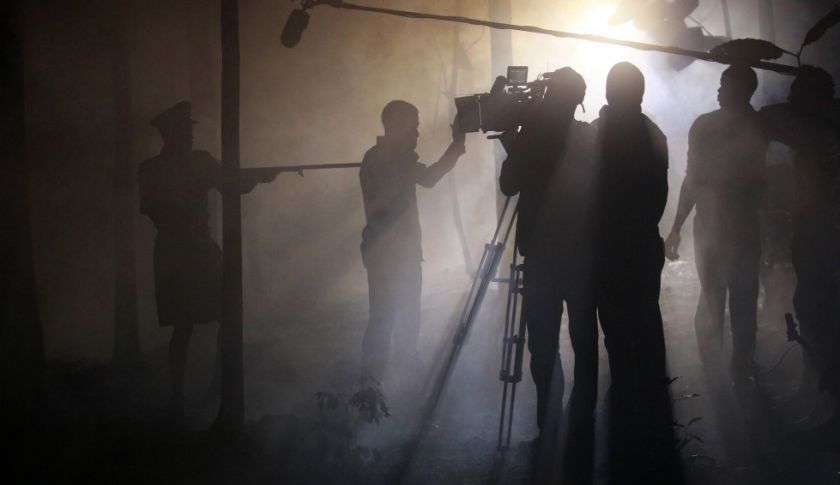
Photo source: Kunle Afolayan 
(Fortune)--Last year, data was released showing that Nollywood is a $3 billion industry. It is bigger than Hollywood by volume, and right behind India’s Bollywood.
In 1992, in Nigeria, electronics salesman Kenneth Nnebue shot a straight-to-video movie in one month, on a budget of just $12,000. Living in Bondage sold more than a million copies, mostly by street vendors, and Nollywood – Nigeria’s movie industry – was born.
By 2009, Nollywood had surpassed Hollywood as the world’s second largest movie industry by volume, right behind India’s Bollywood. And in 2014, the Nigerian government released data for the first time showing Nollywood is a $3.3 billion sector, with 1844 movies produced in 2013 alone.

Monday, December 29, 2014

"New Nollywood": Raising the Artistic Bar

By his own estimates, Lancelot Oduwa Imasuen has directed somewhere between 150 and 200 movies over the course of his 20-year career — including hits like “Games Women Play,” “Last Burial” and “Behind Closed Doors,” which have made him one of the most prolific directors in the Nigerian film industry, popularly known as Nollywood.
But Imasuen tends to distance himself from his early, mercenary years, when producers would approach him with shoestring budgets and shoddy scripts for movies he might have shot in just four days. Today he produces and directs his own films. “I wouldn’t even have the time to be as prolific as I used to be,” he said recently, while discussing his latest movie, “Invasion 1897.” 
An epic tale about the British Army’s ransacking of the ancient West African kingdom of Benin, “Invasion” was a labor of love that took Imasuen close to four years to produce. Ten years ago, the movie’s million-dollar budget would have been enough to make a movie like “Games Women Play” and 24 sequels. But like many of his peers, who have watched shrinking investments and rampant piracy hobble their industry, Imasuen is gambling that big-budget, big-screen blockbusters will breathe fresh life into Nollywood.